In this post homeschooling young toddlers 9-18 months old will be explored insha'Allaah. The ages will be covered in two groups: 9-12 months old, 12-18 months old.
Homeschooling Your 9-12 Month Old Child
At this point baby may be reaching for specific objects of interest, be able to search for objects that are no longer in sight, dropping things intentionally and repeatedly (toys from a crib), using his/her thumb to pick up objects, enjoying seeing self in the mirror, transferring objects from one hand to the other and babbling as if speaking.
Alhamdulillaah your little one is also fast approaching the time when he/she will begin speaking. Insha'Allaah baby has been read to every day and lots of conversations have taken place between the parents and their child. These are the building blocks of language acquisition. If you haven't already, you may wish to begin filling baby's vocabulary with many new words that he/she will eventually use insha'Allaah. Describe the environment using adjectives, verbs and nouns to help baby learn how to eventually communicate about the world we live in with words (i.e. You have a blue and white cup. There is a red and yellow sail boat on it.).
Also at this point, your baby may no longer take his/her morning nap and this time can be used for presenting engaging activities that will help build essential skills insha'Allaah.
At this age, baby's activity schedule may include the following:
 | ||
| Click on image for larger view |
 |
| Picture Creative Commons: Ella's Dad |
- Hide & Seek: Pick one of baby's toys and a blanket. Show the baby the toy and place it under the blanket, leaving part of the toy still showing. Invite the child to find the toy.
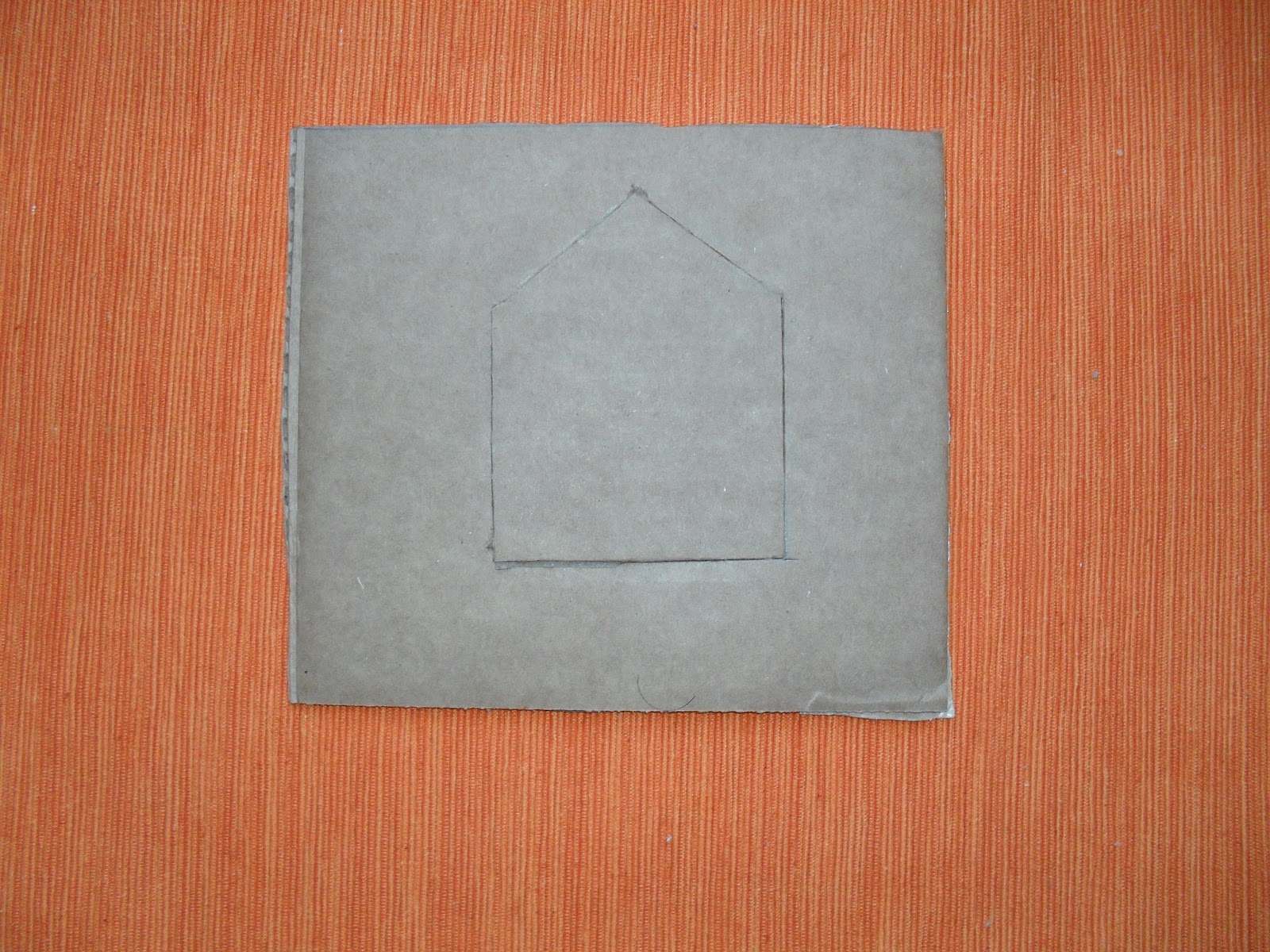
- Shape Sorter: Standard shape sorters may be developmentally inappropriate at this time but you can easily make your own with a shoe box and 3 simple shapes (i.e. circle, square, triangle). Cut out each shape in the shoe box, making sure that no other shape can fit in the space of another (i.e. the circle can't also fit in the space for the square). Show the child how to compare each shape to the shape in the shoe box before correctly matching the shape and inserting it into the box where it belongs.
- Stacking Measuring cups: Using kitchen measuring cups, show your child how to correctly stack the measuring cups inside of one another. Invite the child to stack the cups independently.
- Sorting Activity: Use two objects that are dissimilar (i.e. combs and brushes). Try to make sure the objects are dissimilar enough for baby to distinguish them from one another. Show the child how to sort them (i.e. all brushes go in a basket on the right and all combs go in a basket on the left). It is helpful to have a picture in each sorting bowl/basket to assist the child.
- Using a Spoon: Put cheerios in a bowl, in front of the child and on his/her right hand side. Next to the bowl of cheerios, place an empty bowl. Using a child sized spoon show the child how to use the spoon to pick up a cheerio and place it in the empty bowl. There is no need to speak when showing the child how to do this. After showing the child how to transfer a few cheerios from one bowl to another, invite the child to do the activity independently.
Homeschooling Your 12-18 Month Old Child
Baby is now more mobile and learning at an amazing pace masha'Allaah. Quran, athkar and teaching baby authentic sunnan are as important now as they were when baby was an infant. Baby is now learning a tremendous amount of information using his/her five senses and this is an opportune time to begin teaching him/her about Allaah's creation.
Baby can now show active interest in picture books, claps his hands, shows preferences for food, toys, etc., begins to pull himself/herself up into the standing position and move about the room using furniture, puts many things into his/her mouth, eats finger foods, and drinks from a cup.
At this age, baby's activity schedule may include the following:
- Teaching vocabulary that helps them understand and identify things in the world. This idea, for example, is very kid friendly. Children can learn about the weather but also practice fine motor skills and learn how to take objects out and put them back in to a pocket. This activity can be used to teach the words/concept: "In" and "Out".

- Matching shapes to their outlines: Use cookie cutters. Trace the shape/outline of each cookie cutter onto pieces of square paper. Demonstrate how to match each cookie cutter to its outline and then invite the toddler to do the same.
- Learning to drink from a cup: Provide your child with a very small cup (one that holds about 1 teaspoon of liquid). Show baby how to hold the cup and drink from it. After demonstrating, invite baby to do the same.Provide lots of opportunities for baby to practice this and expect spills.
- Putting lids on and taking them off: Give your little one a pot with its matching lid (already on). Show the child how to remove and replace the lid. Invite the child to so the same. As the child becomes proficient, introduce another pot and lid (in addition to the first one).
- Pincer Grasp practice: Use a clean empty coffee can or a basket with a smooth rim. Use clothes pins and show the child how to use the pincer grasp to open the clothes pins and place them, one by one, on the rim/edge of the coffee can. Show the child how to remove them and place them into a basket on the right (or left is your child is learning in English). Invite the child to do the activity by him/herself.
- Matching Colours: Use paint strips (many hardware stores have these available for free in the paint department). Get two sets of each colour. Cut each strip to isolate each primary colour and mount them on stiff cardboard or small wood pieces (found at craft stores) making sure only the colour is showing (i.e. not the colour of the wood underneath or a border from the cardboard). Start with two colours (i.e. red and blue). Place all of the colour cards on a workmat (in no particular order but so that no two matching colours are next to each other). Make sure the child is facing the workmat (i.e. next to you, in your lap). Pick up one of the blue colour cards and silently put it next to a red card. Say, "The card I have is the colour blue. This card (point to the red card) and say, "This card is red. They are not the same colour." Then move the blue card next to the other blue card. Pause, leaving the two cards next to each other and say, "Both of these cards are blue." Leave the blue card next to its match. Do the same thing with the red card. Mix the cards up again and invite the child to match the colour cards. As the child shows mastery of the concept introduce another primary colour (i.e. green).
- Teach the parts of the head/face (i.e. head, ears, nose, mouth): Touch your nose and say, "Nose. This is my nose. Can you point to your nose please?" and repeat with the other parts.
- Two piece puzzles: Take pictures (without living creatures and that do not have faces in them) and mount them onto stiff cardboard or cardstock. Cut the pictures into two pieces to make 2-piece puzzles. Introduce the activity using only one puzzle. Present the puzzle as a complete puzzle. Then take the puzzle apart and show the child how to put the puzzle together again. Intentionally place the pieces in incorrect positions (so that the puzzle is not accurately put together) before putting it together correctly again.
- Put it in and take it out: Take a piece of fabric or felt and sew a pocket onto it. Take a small toy and show the child how to place the object into the pocket and remove it again. Invite the child to do the activity (like the picture of teaching about weather above).
- Vocabulary Building: Reading books that focus on introducing vocabulary words that are related to: names of pieces of clothing, different animals, colours, etc.
 |
| Click on image for larger view |
Activities such as those mentioned above do not need to be long in their presentation and can last a few minutes or several. If your child wishes to continue with an activity allow him/her to do so uninterrupted but if you notice the child has lost interest, end the activity and take the child with you as you clean up the materials and put them in their correct spot.
Insha'Allaah this has been helpful to those who have children in this age range and if your child is one years old, you may find the following book helpful. In it you will find activities suitable for children ages 1-3 with clear instructions about how to do each activity, what is needed and possible extensions where appropriate.