Tuesday, November 3, 2009

Object Permanence Activity: Where is the prayer rug?

Assalamu alaikum,

For those who are considering using the Montessori method to homeschool or are currently doing so insha'Allah, I wanted to share this activity insha'Allah. This is another activity that is used in Montessori education. This activity helps develop object permanence in infants about 9 -12 months old. You can buy the object permanence boxes used in Montessori classrooms but some of them can cost as much as $54.00 (ouch!). You can see some object permanence boxes here insha'Allah. But all I did is hop over to the craft store and bought a wooden box with several drawers.  You can even make one using a box that has one drawer like the Q-Tip Boxes.

What is object permanence? This term refers to the idea that an infant does not realize that an object still exists even though it is no longer in sight/view. When an infant reaches the milestone where he/she develops object permanence, the child then realizes that yes, an object does still exist even when he/she cannot see it.

This activity also helps a child practice fine motor skills which will be used later in writing. This is accomplished when the child uses the 'pincer grasp' (using the thumb and first finger to grasp something) to open the drawer. Through this activity the child also has an opportunity to develop hand-eye coordination and finally the child is able to work on object permanence insha'Allah. To do this activity with your child you will need a box or container that has 1 (or more than 1) drawer insha'Allah.

If you use a box like the one pictured above, first be sure to cover it with construction paper, or something similar, in a solid uniform colour (you want to avoid using more than one colour so the infant is focusing on the objective of the activity and not the different colours of the box). You can cut a hole in the shape of a circle on the top of the box and invite your child to drop a ping pong ball into it and then open the drawer to locate it insha'Allah. Be sure to demonstrate to the infant how to do this before you invite him/her to do it on their own. If you use the prayer rugs, you can simply open the drawer (no need to cut a hole in the top of the box) and show the infant that you are hiding the prayer rug and then ask him/her where is the prayer rug and allow them to open the drawer to find it insha'Allah.

If using a box or container that has more than one drawer like the one pictured below, you will do the activity in the following way insha'Allah: Sit with the infant across from you or next to you insha'Allah. I strongly recommend using a mat (called work mats in Montessori education) because this helps the infant understand and delineate a defined workspace insha'Allah.


Wait until you have the infant's attention and then tell the infant that you are going to hide the prayer rug insha'Allah. When you are sure you have the infant's attention, slowly open the drawer (or one of the drawers if your box has more than one drawer) and put the prayer rug inside. Ask the infant, "Where is the prayer rug?"  Invite the infant to find the prayer rug. Do not be concerned if he/she opens the wrong drawer. The child will self-correct after doing the activity several times insha'Allah. Allow the child to open all of the drawers until he/she finds the prayer rug. When they find the prayer rug, simply smile and say "Jazakum Allahu Khayr. Yes, that is where the prayer rug was."


**I forgot to mention: keep hiding the prayer rug for as long as the infant shows interest. When the infant no longer shows interest, put the activity away. Try to involve the infant in the cleaning up process as much as possible (even if you simply take them with you to put it away insha'Allah). This helps lay a foundation for learning to put things away later when they are older insha'Allah.

You can print out the prayer rug images here or design your own insha'Allah. The prayer rugs in my file are about 6 cm x 3.2 cm so you may need an image that is larger or smaller depending on your box. For durability, mount the prayer rugs on sturdy cardboard or card stock insha'Allah.

Enjoy insha'Allah!

Book Give Away Insha'Allah

Assalamu alaikum,

A while back I mentioned that I want to do a book give away. Well, the idea is still there but I'm stuck. First, I want to make sure that kids will enjoy and benefit from the book insha'Allah. Second, I can't think of how to select who wins the book(s) insha'Allah. But I'm moving closer to a solution insha'Allah. Umm Abdul Basir has kindly agreed to have her children preview and give their opinion on the book insha'Allah. Once her children give the thumbs up insha'Allah (smile), I'll figure out how to decide who wins the book(s) and how insha'Allah. Don't be shy to give your suggestions insha'Allah. As you can see, I've been stuck on this for a while now...(smile).

Here is a sneak peak at the book I'd like to give away insha'Allah. It is not available for sale yet as I want to make sure it's kid-friendly insha'Allah.

I'm thinking of having the cover re-designed - what do you think?

The book has five Islamic stories that have pictures to aide children in independent reading insha'Allah.

My initial thought was to ask a question based on the Deen and the first five (or whatever number I finally decide on insha'Allah) people to answer it correctly win the book insha'Allah. But...I'm still thinking insha'Allah.....

Monday, November 2, 2009

Hajj Activity: Introduction to Addition & Subtraction

Assalamu alaikum,

Recently, a few sisters asked to see more posts using the Montessori Method insha'Allah. Alhamdulillah, in this post, I've given a simple activity that is used in Montessori classrooms for children who are 6 to 9 years old, but it is easily modified for children as young as 3 (and as old as 5) insha'Allah. The activity in this post is for children 3 to 5 years old insha'Allah.

This is an introdcution to the concept of addition and subtraction using the familar concpet of making tawaf around the Ka'aba insha'Allah. After the activity, I've also included some books that you may find helpful if your desire is to impliment Montessori in your home. I find that this method of education greatly lends itself to homeschooling masha'Allah.

In this activity, children use a spinner that has either 1-4,1-6 or 1-8 (depending on thier age and knowledge of numbers), to explore the concepts of Addition and Subtraction insha'Allah. You can download a 1-4 spinner here and a 1-8 spinner here insha'Allah.

The child spins the spinner and whatever number it lands on, they add that number of hujjaj to the picture of the Ka'aba. They spin again and add (or subtract - depending on what concept you are covering/teaching) that amount of hujjaj to join (or leave) those  hujjaj that are currently making tawaf around the Ka'aba insha'Allah.

This is the activity

A close-up view of the activity

When the student spins the spinner the first time (and after adding the hujjaj to the picture), he/she writes that number in the first box (in the first column) on the Addition (or subtraction) Chart. The child then spins again to see how many more hujjaj enter the Haram to make their tawaf insha’Allah. The student writes that number on the “Addition (or Subtraction) chart in the third box in the third column insha’Allah. The student then looks at the picture and counts to see how many hujjaj are making tawaf around the ka’aba in total (all together). He/she then writes that number in the fifth box (in the fifth column). The activity continues this way until the student completes the chart insha'Allah.

The Addition Chart (with a sample of what it would look like when the child fills it out insha'Allah)

This is a simple activity that is used to introduce, teach and reinforce the concept of adding and subtracting. It can be played individually or with two people insha'Allah. You can laminate this activity (if being used in a classroom for example) or leave it as is insha'Allah.

If you want to explore how to use the Montessori Method in your homeschool insha'Allah, you might find these books helpful insha'Allah: Montessori From the Start and Teach Me To Do It Myself.  Check your local library to see if they have them but there may be a long waiting list for them.

Enjoy insha'Allah!

Thursday, October 29, 2009

Montessori Toddler Lapbook: My First Lapbook

Assalamu alaikum,

Alhamdulillah, I finished my first lapbook! It's a Montessori inspired Toddler lapbook insha'Allah. It contains things that todders do throughout their day insha'Allah.

This is the cover:


This is the first page and the inside flaps (right and left flaps):


This is a close-up of the first inside page. There are cards for Quran and dua on the left flap. In the middle it says 'Storytime' and the bookcase has three pockets to hold mini-books insha'Allah. You can also see the right flap in this picture. It has an ayah about the five daily prayers, a hadith about them and then a mini-book that names each of the five daily prayers. Kids can colour this mini-book insha'Allah.


This is the next page. It is for learning to set a table correctly (Montessori inspired). Two year olds learn this in Montessori classrooms (or is it younger? I don't remember right now). I will use real child size dishes for this activity insha'Allah.


This page shows a colour matching game. There is a pocket on the bottom of the page to store the different colour masaajid insha'Allah.


This page shows a lift the flap book about fruits:


This is the last page and it is also Montessori inspired. The child matches the geometric shape to the outline. There is a window in the midle of the page so the shapes can be changed insha'Allah. The pieces for this activity are stored in a pocket on the back of the lapbook insha'Allah (not pictured).


This lapbook took me about a week to complete because I kept changing my mind about what I wanted to put in it (hehe)...so many possibilities! I wanted this lapbook to be something the kids can work on pretty much independently insha'Allah. I was also thinking 'travel companion' for kids too insha'Allah.

Insha'Allah, I'll update this post and add the Arabic Quran and Dua files but here is the 'Five Daily Prayers' Minibook in English and this is the 'Five Daily Prayers Minibook in Arabic insha'Allah. Unfortunately, the Arabic files are giving me trouble when I try to PDF them and even in MS Word they're doing funny things.

Also, jazakillahu Khayr dear sister Umm Abdul Basir for teaching me how to add extensions to a lapbook (her pictures where the only things that helped me figure it out. I couldn't find any tutorial on the web that shows how to do that subhana'Allah).

But alhamdulillah the lapbook is done. I think these will be very useful to have in learning centres insha'Allah. I don't know what we'll do next but we'll see insha'Allah.

*Update* : Here are the graphics I used for the lapbook insha'Allah: Lapbook Grapics and here is the Masjid Colour Matching Game insha'Allah.

*Update II*: Here are the Quran cards and Athkar cards for the lapbook alhamdulillah.

Enjoy insha'Allah!

Wednesday, October 28, 2009

Ka'aba Sequencing Activity

Assalamu alaikum,

Well now that we've gotten started on ideas for Hajj, my little grey cells are working (smile). This is a Ka'aba sequencing game. Very simple to put together insha'Allah. Just cut out all of the pictures of the Ka'aba, mount them on cardstock for durability insha'Allah, laminate (if possible) insha'Allah and then invite your child to put the cards in order from largest to smallest or vice versa (i.e. smallest to largest).

The benefits of sequencing activities are many:
  1. They help children remember the steps involved/used in a  process.
  2. They help children begin to understand that things have a logical order.
  3. The children begin to understand the concept of first, next, last, etc.
  4. The activity can also be used to teach the concept of ordinal numbers (i.e. 1st, 2nd, 3rd, etc.) insha'Allah.

Here is the file you will need insha'Allah: Ka'aba Sequencing Activity (The activity has been removed until a person of knowledge can be asked about it. This is to ensure that children do not become confused and think there is more than one ka'aba...jazakallaahu khayr to the individual who posed this question).

Enjoy insha'Allah!

Hajj Game for Preschool and Kindergarten

Assalamu alaikum,

Insha'Allah, Hajj is near. This is a wonderful time to begin teaching children about this amazing journey insha'Allah. I did not actually have it in mind to post anything about Hajj but as I was searching for another file, I came across this game I designed last year alhamdulillah. This game, I'm Learning About Hajj,  is designed to teach children, ages 3 to 5 years old, about the rites of Hajj in a simplified, yet accurate, manner insha'Allah. The game lends itself to two ways of playing: A memory game and a matching game insha'Allah (it is very similar to the Allah Created Colours Game). I've used real pictures in this game as much as possible due to the subject matter and some of the pictures have humans in them but the facial features are not visable insha'Allah.

I am not able to post pictures of the game but insha'Allah if anyone makes the game, and you take pictures insha'Allah, I will be happy to add your pictures to this post insha'Allah. *Please take care not to include any people (with facial features) in the picture(s) insha'Allah - jazakum Allahu khayran.

Here are the files for the game insha'Allah:


If time permits, biithnillah, I'll be adding more Hajj games/crafts/activities in the coming weeks.

Enjoy insha'Allah!

Sunday, October 25, 2009

Pre-Puzzles (Preparation For Working With Puzzles)

Assalamu alaikum,

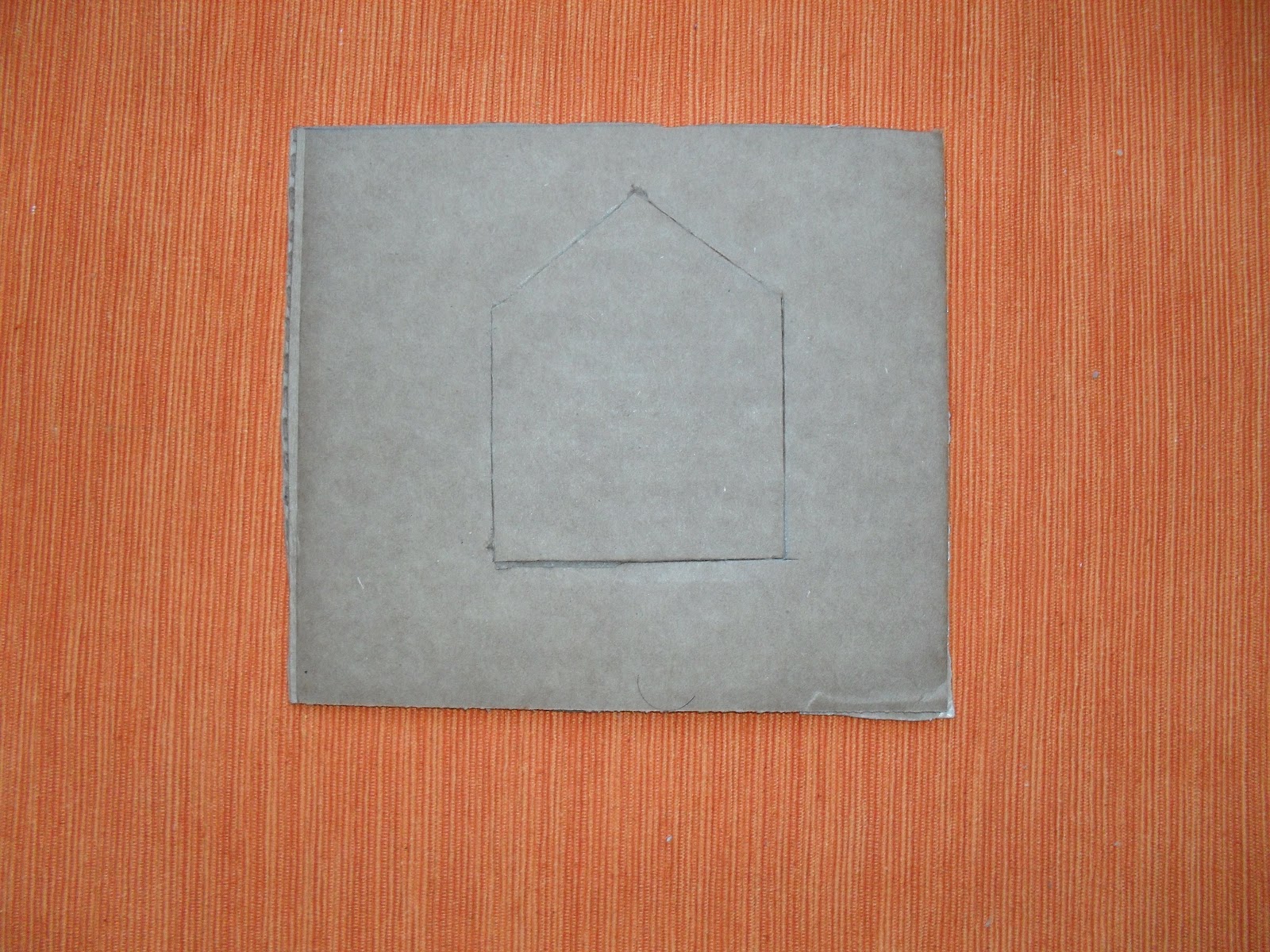
This activity is one that is intended to prepare infants 12-15 months old for working with puzzles. In this activity, infants match a cut out piece to its outline insha'Allah.


This is a Montessori activity and as with many of the materials in the Montessori setting, it is not difficult to make alhamdulillah. What is important, as with all presentations in Montessori settings, is the way the activity is introduced and subsequently 'presented' insha'Allah.


While I cannot tell you specifically how to present these (because this idea is not mine and I learned this during my own training alhamdulillah), they really are simple to make alhamdulillah.

The key thing to remember is to show the infant how to match the piece to its outline but to intentionally make mistakes and show your repeated attempts to match the piece before you correctly match the piece to its outline. This is very common in the Montessori method (and in others as well).


After the child has become proficient, you can then move to the two piece puzzles found here and here insha'Allah.

Note: If you are going to use a masjid (as above, for example) I would suggest using one that is simpler than the one I chose. The reason being: it wasn't easy to cut out! (smile)

Enjoy insha'Allah!
Related Posts Plugin for WordPress, Blogger...